
Person-centered therapy: books, training, videos and associations

Person-centered therapy, developed by Carl Rogers from the 1940s, rests on three therapist attitudes: congruence, unconditional positive regard and empathic understanding. It is used in individual and group work and has grown into a wider person-centered approach.

The method in short

Founder
Carl Rogers (1902-1987), USA; the approach took shape in the 1940s
Therapist attitudes
Congruence, unconditional positive regard, empathic understanding
Format
Individual therapy and encounter groups
Offshoots
Focusing-oriented therapy, emotion-focused therapy, person-centered expressive therapy, pre-therapy

Primary sources: ADPCA: the history of the person-centered approach, ADPCA: core values of the person-centered approach, PCE Europe: training standards

We give you information and answer for how we select it. Check terms, prices and dates with the organiser.

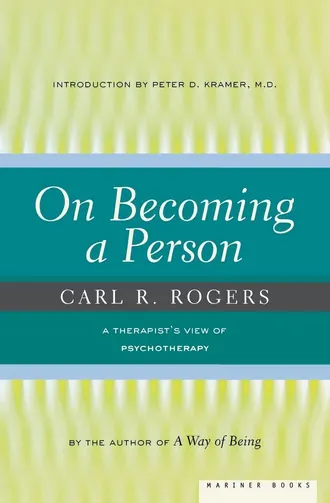
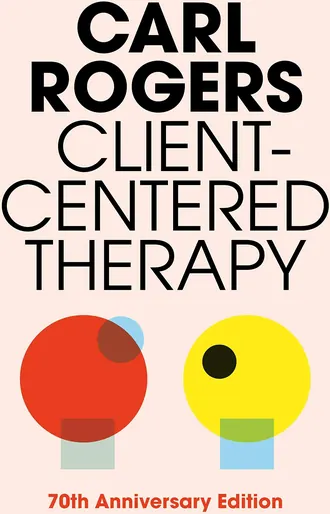
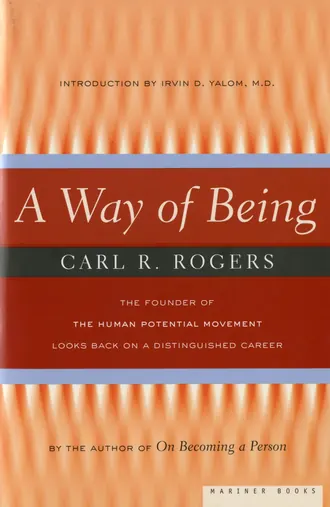
Person-centered therapy books

Books from our shelves that fit the method. A separate shelf for the method is being built.

Person-centered therapy training

We do not run courses. Each programme has a link to the organiser and a check date.

Metanoia Institute, London

MSc Person-Centred Psychotherapy

A three-year part-time master’s awarded by Middlesex University; the page names UKCP as the accrediting body. Weekend teaching blends in-person and online study, with a community encounter group, supervised clinical practice, personal therapy and supervision.

Format
Part-time, blended
Language
English
For
Normally the institute’s UKCP preparatory year or an equivalent, with Level 6 degree requirements; IELTS 7.0 if English is not your first language

Listed byPCE Europe, organisational members list

Organiser’s siteChecked: November 1, 2026

Person Center, Prague

PCA Training: part-time Person-Centered Approach training in English

An experiential programme of three yearly modules, about one face-to-face meeting a month in Prague. It covers personal development, PCA theory, counselling and communication skills, with supervision. The provider issues a certificate of attendance per module and a certificate of completion after all three.

Format
In person, part-time
Language
English
For
Professionals and motivated applicants from other backgrounds with good working English; group or personal-therapy experience is preferred; a meeting before the start is required

Listed byPCE Europe, organisational members list

Organiser’s siteChecked: November 1, 2026

APCCA, UK

Certificate in Therapeutic use of Person Centred Creative Arts (Level 2)

An experiential online course of 84 taught hours plus home study and peer practice, assessed by portfolio with peer assessment. The association says its model was developed by Liesl Silverstone in consultation with Carl Rogers; graduates become eligible for APCCA Practitioner status.

Format
Online
Language
English
For
People working in counselling, psychotherapy, psychology, coaching, education, healthcare, support work or similar roles; you must be able to practise outside the course and arrange supervision
Organiser’s siteChecked: November 1, 2026

How to choose a programme

  • Recognition. A professional association registry or an accredited provider list.
  • Practice. Hours under supervision and live discussion of your own cases.
  • Teachers. Experience in this particular method.
  • Outcome. A certificate, a path to certification or only knowledge.
  • Entry. Whether you need a base qualification and proof of practice.

Person-centered therapy videos

All videos on methods

A Conversation with Carl Rogers: The Job of a Therapist

Channel: Saybrook University · Checked: November 1, 2026

Carl Rogers speaks about his job as a counselor and therapist, the instruments of that job and how he builds a psychological climate of helpfulness. The description dates the recording to 1960.

Open on YouTube ↗

Carl Rogers: The Conversation

Channel: Saybrook University · Checked: November 1, 2026

Carl Rogers talks about his person-centered view of psychology. The description dates the recording to 1983.

Open on YouTube ↗

Conversation with Carl Rogers: The Therapeutic Process as Experienced by the Client

Channel: Saybrook University · Checked: November 1, 2026

Rogers describes the therapeutic process from the client’s side and shows how he creates a therapeutic climate, with a therapeutic interview. The description dates the recording to 1960.

Open on YouTube ↗

Person-centered therapy associations and institutes

Practitioner registries, training standards, conferences. The links go to official sites; the descriptions are ours.

international

PCE World (WAPCEPC)

The world association for person-centered and experiential psychotherapy and counselling. It publishes the PCEP Journal, holds a conference every two years and takes individual and organisational members, with chapters including PCE Europe.

Official siteChecked: November 1, 2026

Europe

PCE Europe

The European network of person-centered and experiential associations. It sets training standards, awards the European PCE Certificate to practitioners, trainers and training organisations and keeps a public directory of certificate holders.

Official siteChecked: November 1, 2026

international

ADPCA

The Association for the Development of the Person-Centered Approach: an international association with an annual conference built around community meetings, the Person-Centered Journal in open full text and a newsletter.

Official siteChecked: November 1, 2026

United Kingdom

The Person-Centred Association (tPCA)

A UK membership association. It keeps a directory of therapists and supervisors, runs events and publishes the Person-Centred Quarterly, a journal archive and a podcast; it is an organisational member of PCE Europe.

Official siteChecked: November 1, 2026

Person-centered therapy questions

How do I choose a person-centered training?

Look at what the programme contains. PCE Europe’s standards describe experience of self-development in groups or therapy, study of Rogers and other theorists, application of the core conditions and supervised practice with clients. Then check who issues the award: a university, a professional body such as UKCP, or the provider itself.

Is client-centered therapy the same as the person-centered approach?

Client-centered is the name Rogers gave his therapy after his earlier non-directive method (the book Client-Centered Therapy appeared in 1951). Person-centered is the wider name: according to ADPCA, the approach is also applied in group work, organizations, education and other settings. Some authors keep the term for the classic approach only, others use it for later offshoots.

How is it different from emotion-focused therapy?

Rogers’ initial non-directive method avoided questions, interpretation and advice and relied on listening and reflecting. Emotion-focused therapy, developed by Greenberg, Elliott and others, grew out of the approach but adds Gestalt and other techniques to guide the process while keeping the relationship primary, as ADPCA describes.

Do I need a degree or licence to train?

It depends on the provider and the country. A master’s such as Metanoia’s normally expects a degree-level qualification and a UKCP preparatory year, while a creative arts certificate such as APCCA’s is open to people in counselling, coaching, education, healthcare and similar roles. Read the entry requirements of each programme.

An assistant for your practice. Sessio takes care of your notes, client history, schedule and website.

See how it works