


Cognitive behavioral

The sections of a note after an art therapy session and a filled example. Download the PDF or copy it as text.
Four sections reflect how the method works: the creative process, images in the client's words, reflection and affect through the work. The rest are common to any session.
Filled exampleBlank form
An example on a fictional client.To print on A4 or use in your own notes.
What the client came with, key events.
ExampleCame in after a conflict with her manager, has slept badly for a week.
Themes, feelings and body reactions named in the session.
ExampleAnxiety → "my chest tightens before planning meetings".
Materials, how the work was made, engagement or avoidance. The process, not only the result.
ExampleStarted with small pencil strokes, then moved to pastels and pressed hard.
Images, colors and composition as the client describes them. No meaning from the therapist.
ExampleA grey stack of papers and a small figure in the corner: "that's me next to the report".
The client's title for the work, what she noticed and the link to her life.
ExampleTitled it "Five times": "I see how much space the report takes".
Which feeling showed up in the work and whether it shifted, in the client's words.
ExampleAnxiety in the heavy pressure, after adding a window: "easier to breathe", 7 → 4.
Tasks and observations until the next session.
ExampleA small drawing after a hard day, without judging it.
Only signals that came up. Empty if none.
ExampleNone mentioned.
Anything notable in the form of speech. Usually empty.
ExampleNone noted.
What to return to.
ExampleReturn to the drawing: what the small figure needs.
Easier to adapt in Word: Download .docx
Cognitive behavioral

Acceptance and commitment therapy

Dialectical behavior therapy

Schema therapy

Compassion focused therapy

Motivational interviewing
No. Write down what the client said about the image, in her words. Your hypotheses can go into a separate working note.
If the client agrees, a photo helps you return to it. In the note itself, describe the process and the client's words, that is enough.
Yes, the PDF is A4: page one is the blank form, page two is the example on a fictional client. To adapt it, use the Word file.
For therapists
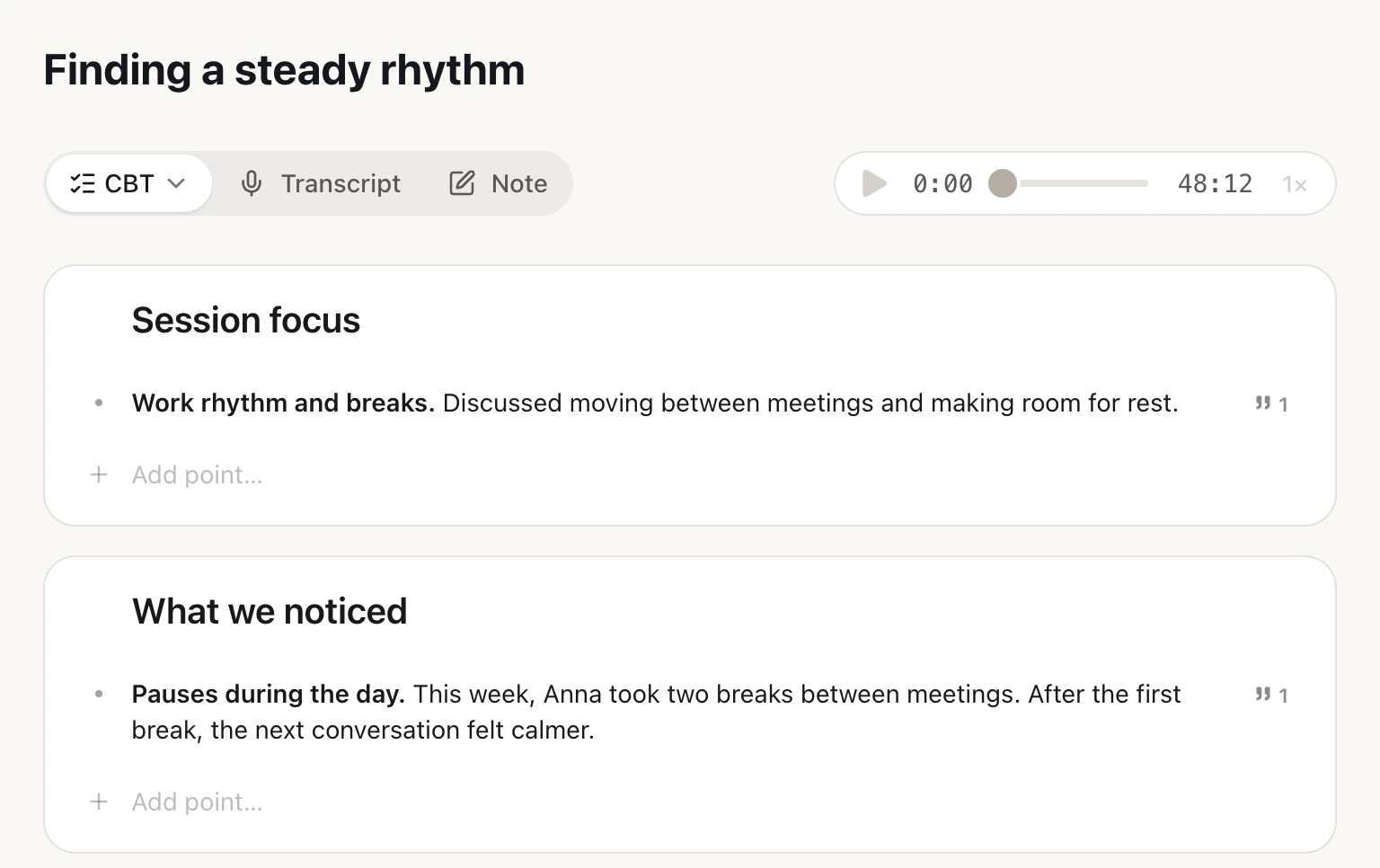
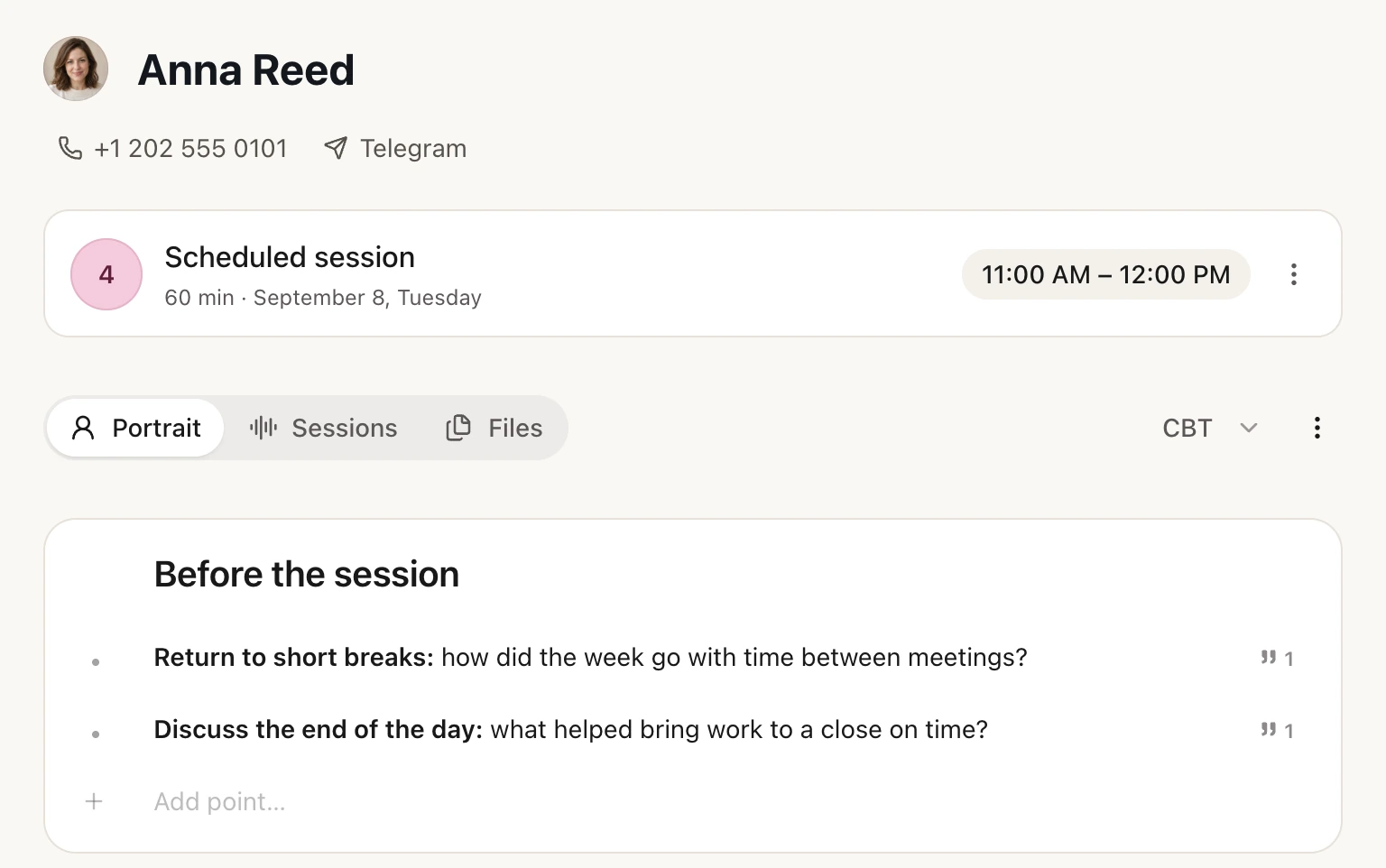
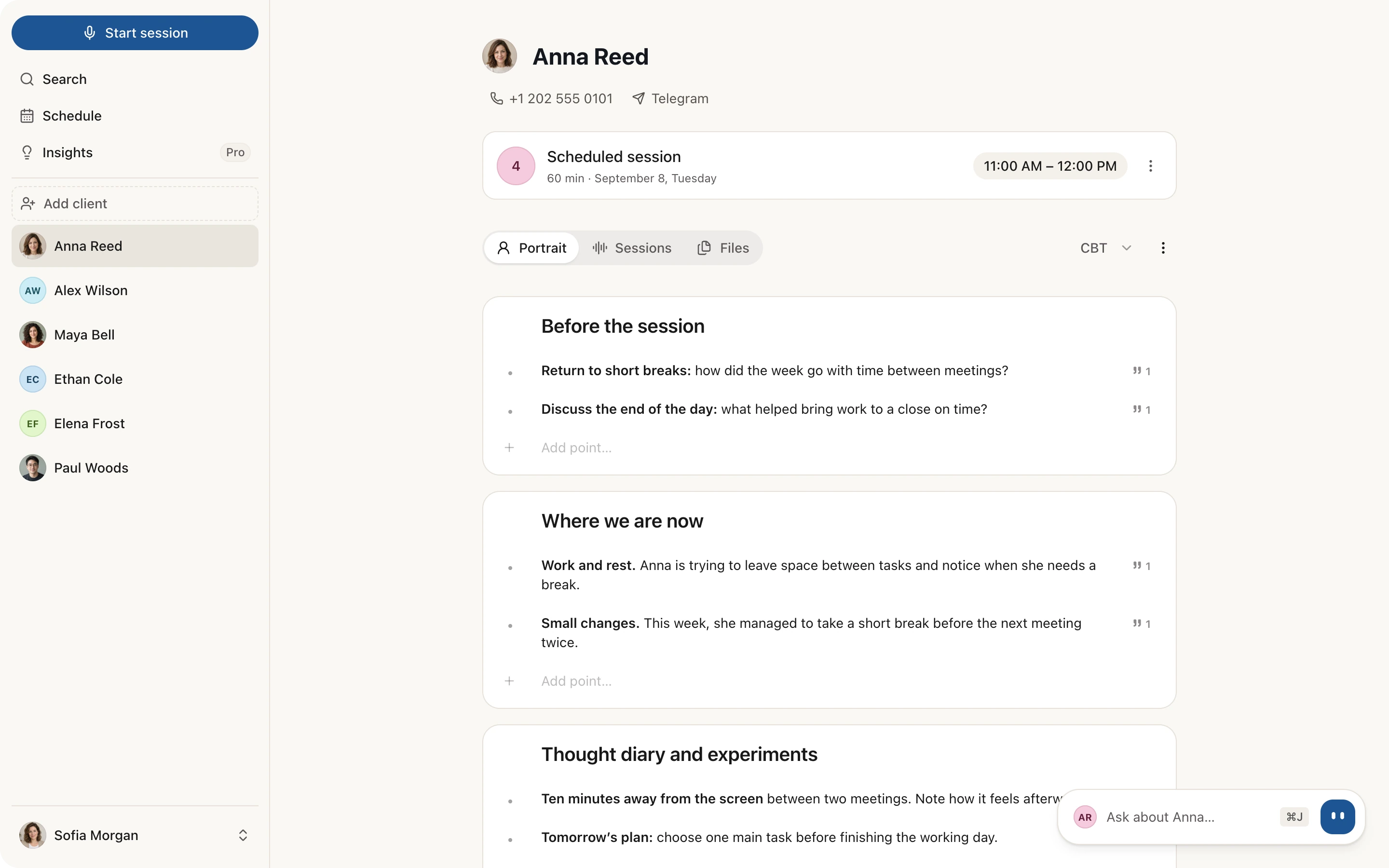
Sessio records the session and sorts it into the blocks of your approach. You review and edit the text, it stays yours.
Sessio Beta is free for now
 Art therapy