


Cognitive behavioral

The sections of a note after a systemic family therapy session and a filled example. Download the PDF or copy it as text.
Four sections reflect how the method works: circular patterns, structure and roles, the generations and the working hypothesis. The rest are common to any session.
Filled exampleBlank form
An example on a fictional client.To print on A4 or use in your own notes.
What the client came with, key events.
ExampleCame in after a conflict with her manager, has slept badly for a week.
Themes, feelings and body reactions named in the session.
ExampleAnxiety → "my chest tightens before planning meetings".
The loop: who does what in response to whom, and how it keeps itself going.
ExampleThe stricter her manager, the more she checks → checking delays the report, and he gets stricter.
Alliances, triangles, hierarchy, roles and how clear the boundaries are.
ExampleWork comes home → she rechecks the report in the evenings, sleep suffers.
Roles, rules and loyalties passed down, and how they repeat now.
Example"In our family we don't make mistakes" → her father's rule, still heard today.
A cautious hypothesis about what the symptom does in the system, or a reframe.
ExampleReframe: checking as care for the work that has become too costly.
Tasks and observations until the next session.
ExampleWatch the loop → note what her manager does after each of her checks.
Only signals that came up. Empty if none.
ExampleNone mentioned.
Anything notable in the form of speech. Usually empty.
ExampleNone noted.
What to return to.
ExampleDraw the genogram: rules about mistakes across three generations.
Easier to adapt in Word: Download .docx
Cognitive behavioral

Acceptance and commitment therapy

Dialectical behavior therapy

Schema therapy

Compassion focused therapy

Motivational interviewing
Yes, systemic work is often done with one person. The note keeps the relationships around the client: the loops, roles and family rules they bring.
SOAP is short and made for reporting, a systemic note is about patterns between people rather than one person's symptoms. In Sessio you can keep both.
Yes, the PDF is A4: page one is the blank form, page two is the example on a fictional client. To adapt it, use the Word file.
For therapists
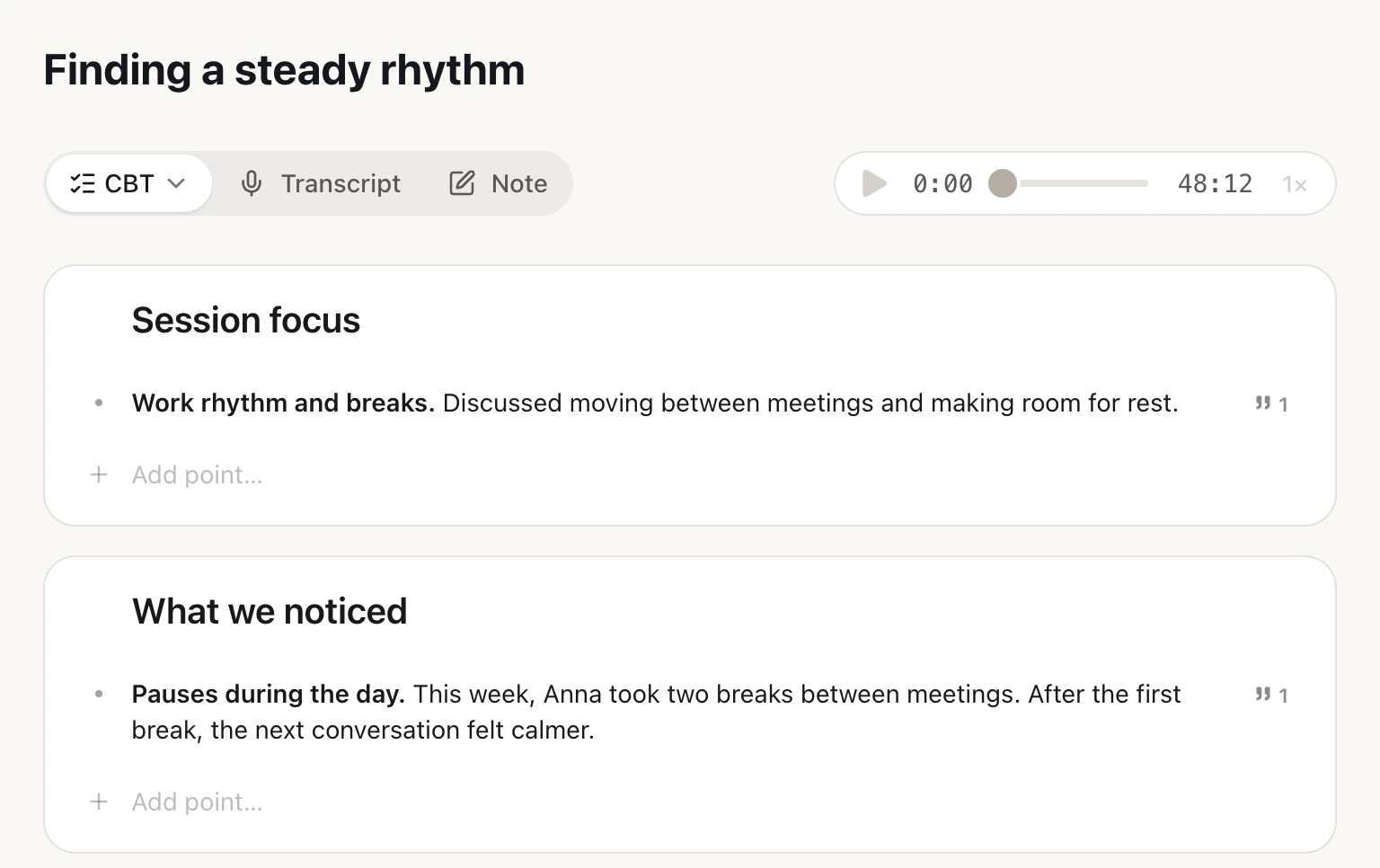
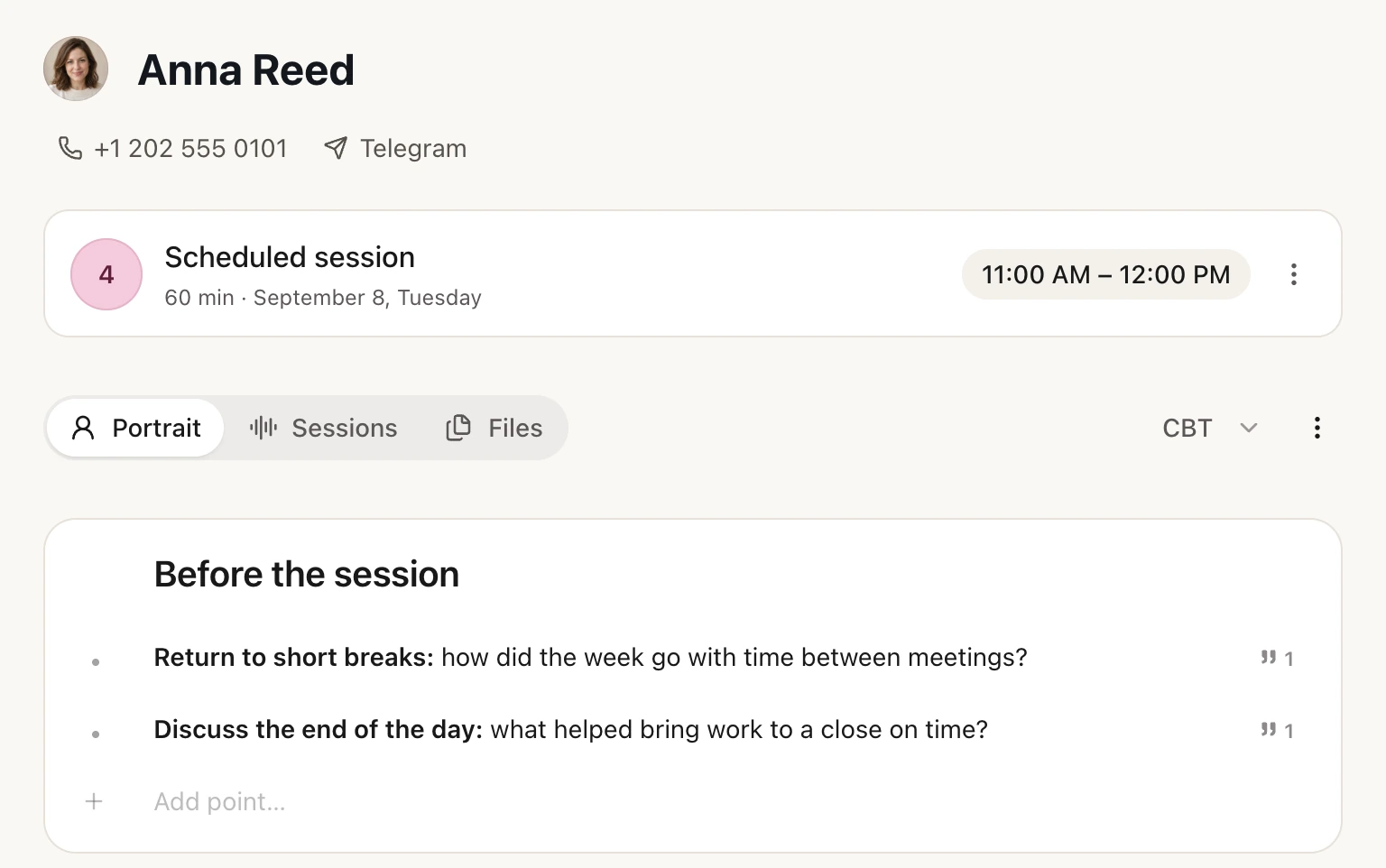
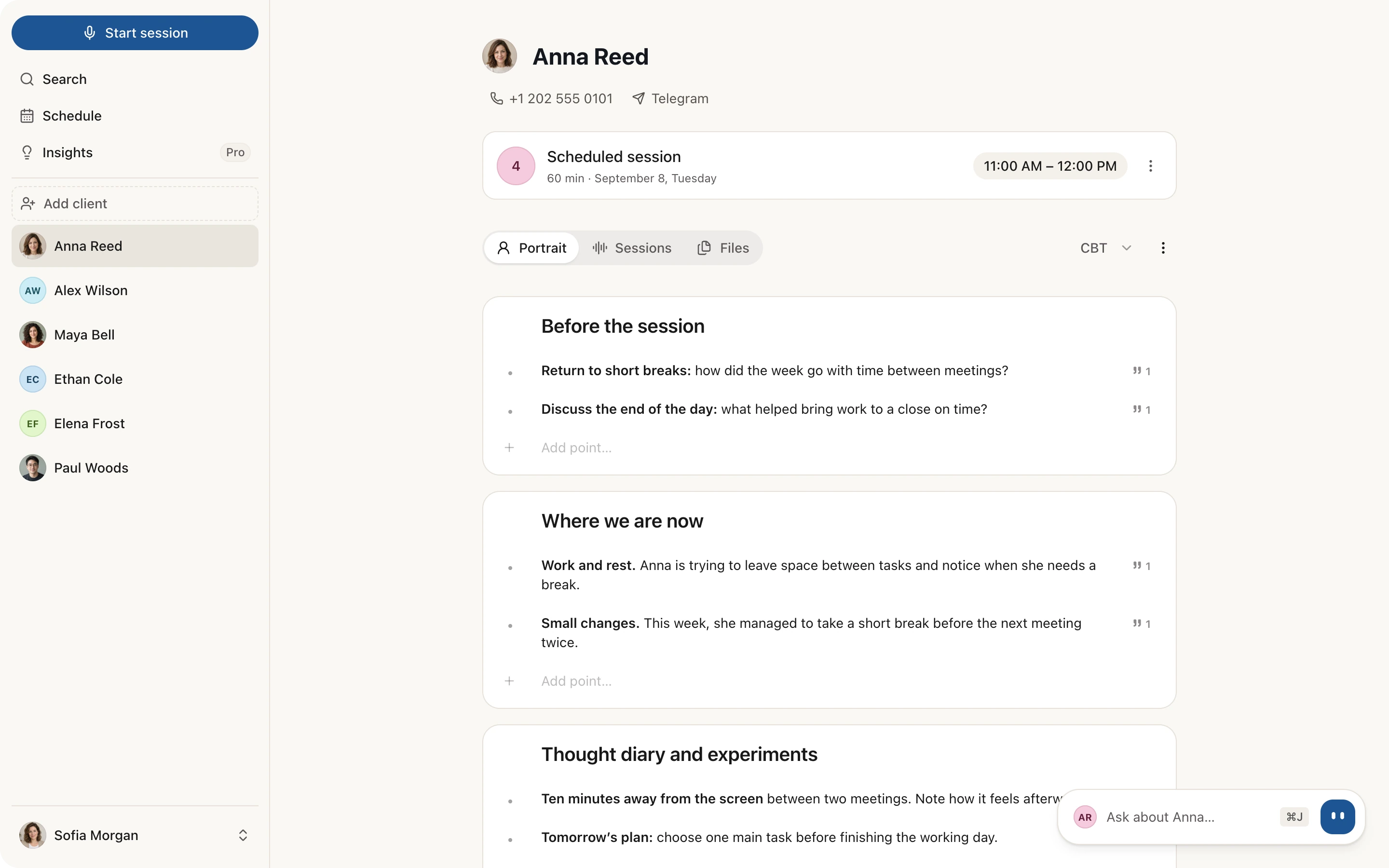
Sessio records the session and sorts it into the blocks of your approach. You review and edit the text, it stays yours.
Sessio Beta is free for now
 Systemic