


Cognitive behavioral

The sections of a note after a narrative therapy session and a filled example. Download the PDF or copy it as text.
Four sections reflect how the method works: the problem story, externalizing, unique outcomes and the preferred story. The rest are common to any session.
Filled exampleBlank form
An example on a fictional client.To print on A4 or use in your own notes.
What the client came with, key events.
ExampleCame in after a conflict with her manager, has slept badly for a week.
Themes, feelings and body reactions named in the session.
ExampleAnxiety → "my chest tightens before planning meetings".
The story the problem tells about the client, and where it takes over.
ExampleThe story "one mistake and it's over" tells her she is hanging by a thread at work.
The problem's name in the client's words, its tactics and the client's stance toward it.
Example"The Checker" → makes her reread the report 5 times, takes her sleep, she wants to push it back.
Moments the client named when they acted against the problem story.
ExampleOn Friday she sent the report after one check → "the Checker was too late".
Who the client wants to be, in their words, and whose voices they bring closer.
Example"Someone who can be trusted without checks" → her grandmother, who said mistakes can be mended.
Tasks and observations until the next session.
ExampleNotice when the Checker steps back → at least 2 moments.
Only signals that came up. Empty if none.
ExampleNone mentioned.
Anything notable in the form of speech. Usually empty.
ExampleNone noted.
What to return to.
ExampleThicken the Friday story: what it says about what matters to her.
Easier to adapt in Word: Download .docx
Cognitive behavioral

Acceptance and commitment therapy

Dialectical behavior therapy

Schema therapy

Compassion focused therapy

Motivational interviewing
Write what the story tells the client about themselves, not what the client is. The problem keeps its own name, separate from the person.
SOAP is short and made for reporting, a narrative note keeps the client's language, the problem's name and the preferred story. In Sessio you can keep both.
Yes, the PDF is A4: page one is the blank form, page two is the example on a fictional client. To adapt it, use the Word file.
For therapists
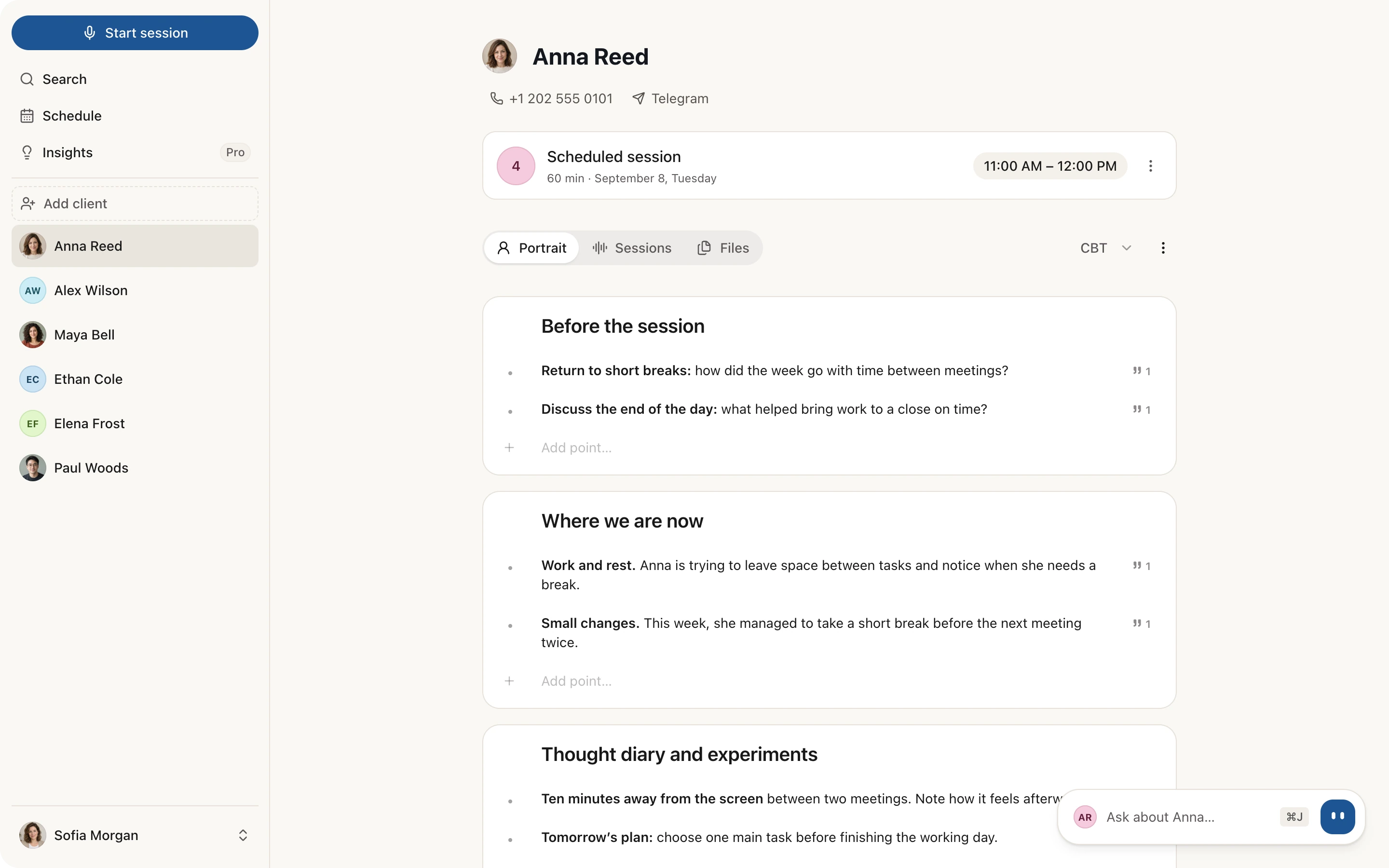
Sessio records the session and sorts it into the blocks of your approach. You review and edit the text, it stays yours.
Sessio Beta is free for now
 Narrative