
Existential therapy for therapists: books, training, videos and organisations

Existential therapy is a family of approaches that build the work around freedom, responsibility and the search for meaning. The schools differ: Viennese (Frankl’s logotherapy and Längle’s existential analysis), American existential-humanistic, British existential psychotherapy and daseinsanalysis.

The method in short

Schools
Viennese (Frankl’s logotherapy, Längle’s existential analysis), American existential-humanistic, British, daseinsanalysis
Themes
Freedom, responsibility and meaning; Längle’s existential analysis rests on four fundamental motivations
Training
Multi-year: 4 to 5 years at SAFPAC (London), 5 to 6 years by GLE-International standards, with personal therapy and supervised practice
UK register
The Society for Existential Analysis registers graduates of accredited trainings with UKCP as existential psychotherapists

Primary sources: GLE-International: psychotherapy training, Viktor Frankl Institute: the institute, Society for Existential Analysis: UKCP registration

We give you information and answer for how we select it. Check terms, prices and dates with the organiser.

Existential books

Whole shelf, 15 books
The Gift of Therapy
The Gift of TherapyIrvin D. Yalom
Man's Search for Meaning
Man's Search for MeaningViktor E. FranklFor clients
The Will to Meaning
The Will to MeaningViktor E. Frankl
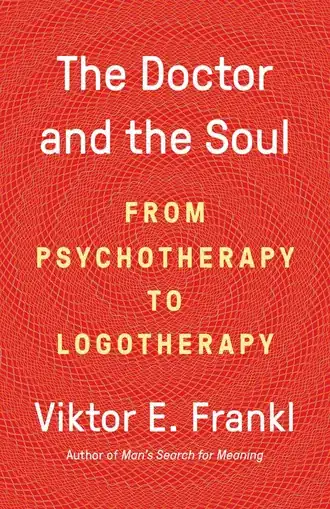
The Doctor and the Soul
The Doctor and the SoulViktor E. Frankl

Existential training

We do not run courses. Each programme has a link to the organiser and a check date.

GLE-International, Vienna

Psychotherapy training in Existential Analysis

The society’s own description of its psychotherapy training: at least 2,112 hours over five to six years, covering theory, self-experience, a practicum, supervised psychotherapy and a final paper. A basic counselling diploma comes first, then the full psychotherapy diploma.

Format
Part-time seminar blocks; see the organiser
Language
English page; teaching language of each group: see the organiser
For
Full training: a master’s or doctorate in clinical or counselling psychology, social work, medicine or a related field. The counselling diploma is open to other backgrounds. Interview and a two-day self-awareness seminar for all
Organiser’s siteChecked: November 1, 2026

Existential-Humanistic Institute, USA

EHI Certificate in the Foundations of Existential-Humanistic Practice

About 55 hours over 12 to 18 months: an annual residential retreat in California, a self-paced theory course with two directed papers, and five two-hour video consultation groups led by institute faculty.

Format
Hybrid: one in-person retreat, the rest online
Language
English
For
Licensed professionals; master’s or doctoral students in psychology, counseling, social work or therapeutic arts who have begun a practicum; health care professionals; holders of a master’s in health or human services
Organiser’s siteChecked: November 1, 2026

Existential Academy, London

Diploma in Existential Psychotherapy

A four-year hybrid training (extendable to eight) taken with the New School’s MSc in Psychotherapy Studies, which is validated by Middlesex University. It includes 450 hours of supervised clinical practice and weekly personal therapy. The provider says graduates are put forward to the UKCP register as existential psychotherapists.

Format
Hybrid: online theory, in-person intensives in London
Language
English
For
See the organiser; the page does not state entry requirements
Organiser’s siteChecked: November 1, 2026

SAFPAC, London

Training in existential-analytic psychotherapy and psychotherapeutic counselling

A four-phase part-time training taught in London on Thursday evenings and some Saturdays, moving from phenomenology and existentialism through psychoanalysis to critical psychotherapy; the last phase centres on practice. The requirements page asks for at least 500 hours of practice and 160 hours of personal therapy.

Format
In person, part-time
Language
English
For
A relevant degree or professional qualification, an introductory counselling or psychotherapy course, relevant experience and two references

Listed byUKCP training organisations directory

Organiser’s siteChecked: November 1, 2026

How to choose a programme

  • Recognition. A professional association registry or an accredited provider list.
  • Practice. Hours under supervision and live discussion of your own cases.
  • Teachers. Experience in this particular method.
  • Outcome. A certificate, a path to certification or only knowledge.
  • Entry. Whether you need a base qualification and proof of practice.

Existential videos

All videos on methods

Introduction to Existential Analysis

Channel: The Viennese School of Existential Analysis · Checked: November 1, 2026

Alfried Längle on how logotherapy came about, why Frankl felt psychotherapy lacked a focus on understanding and meaning, and how existential analysis added a philosophical basis that includes emotion and personal experience.

Open on YouTube ↗

Alfried Laengle Demonstration Session with Digby 2015

Channel: The Viennese School of Existential Analysis · Checked: November 1, 2026

A live therapy demonstration by Längle at the 1st World Congress of Existential Therapy in London, May 2015: a session on loss and grief after the death of a partner, with a comment from Emmy van Deurzen.

Open on YouTube ↗

Existential psychotherapy in 2019: an interview with Manu Bazzano

Channel: Society Existential Analysis · Checked: November 1, 2026

An interview on what is distinctive about existential therapy, its stance towards numbers and the medical model, phenomenology and Heidegger, the neutrality of the therapist, and supervision.

Chapters, 9
  • 0:00What is distinctive about existential therapy
  • 5:05The dogma of numbers in psychotherapy
  • 8:34Husserl and phenomenology
  • 10:13Different attitudes to the aims of psychotherapy
  • 21:01The daimonic
  • 34:48The neutrality of the therapist
  • 45:31Why the emphasis on Heidegger
  • 59:57Existentialism and the arts
  • 1:03:11Glimpsing the tragic: supervision
Open on YouTube ↗

The Renaissance of Daseinsanalysis | Miles Groth, Tamás Fazekas, Kyle Glover

Channel: Society Existential Analysis · Checked: November 1, 2026

A presentation of the third book in the SEA Dialogues series, 25 exchanges of letters from 2020 on what “existential” means. The authors speak about their own route to Medard Boss’s daseinsanalysis.

Open on YouTube ↗

Existential associations and institutes

Practitioner registries, training standards, conferences. The links go to official sites; the descriptions are ours.

United Kingdom

Society for Existential Analysis (SEA), UK

A UK charity of about 450 members with a members’ directory, a journal, the Hermeneutic Circular and SEA Dialogues, plus events and a conference. It is an organisational member of the UKCP Constructivist and Existential College and registers graduates of accredited trainings with UKCP.

Official siteChecked: November 1, 2026

international

GLE-International, Vienna

The international society for logotherapy and existential analysis: runs training in existential analysis (counselling and psychotherapy) and short introductory seminars, lists university master’s programmes in Austria, Moscow and Santiago de Chile, and organises congresses.

Official siteChecked: November 1, 2026

USA

Existential-Humanistic Institute (EHI), USA

A training institute in the San Francisco Bay Area, started in 1997, for licensed clinicians and graduate students: certificate programmes, an annual retreat, a 16-hour online Core Skills workshop and consultation groups.

Official siteChecked: November 1, 2026

international

Viktor Frankl Institute, Vienna

A scientific society founded in Vienna in 1992 to keep Frankl’s work: his archive, the Collected Works and the annual proceedings on logotherapy. Its site says it offers international accreditation of institutions and individual logotherapists.

Official siteChecked: November 1, 2026

Existential questions

How do I choose a training in existential therapy?

Start with the school: Viennese (Frankl’s logotherapy or Längle’s existential analysis), American existential-humanistic or British. Then compare practice and personal therapy: SAFPAC asks for at least 500 hours of practice and 160 hours of personal therapy, and the full GLE-International training is at least 2,112 hours. Check who awards the diploma and which register takes its graduates.

What is the difference between logotherapy and existential analysis?

Logotherapy is Viktor Frankl’s method. Alfried Längle, his pupil, gave it a broader philosophical basis so that it includes emotion and personal experience, and that is how existential analysis arose. In training they are separate lines: the Moscow Institute of Psychoanalysis teaches logotherapy along the Frankl Institute’s guidelines, while MSUPE teaches existential analysis to GLE-International standards.

How does Längle’s existential analysis differ from existential-humanistic therapy?

Existential analysis in the Viennese school rests on four fundamental motivations (being, values, self, meaning) and on GLE’s training structure. The American existential-humanistic line taught by the Existential-Humanistic Institute stresses freedom, experiential reflection and responsibility; its foundation certificate combines a retreat, a theory course and consultation groups.

Do I need a licence or a degree to start an existential training?

It depends on the country and the provider. GLE-International asks for a master’s or doctorate in clinical or counselling psychology, social work, medicine or a related field for the full training, the Existential-Humanistic Institute takes licensed professionals and master’s students with practicum experience, and SAFPAC asks for a relevant degree plus an introductory counselling course. Read the entry requirements on the programme page.

An assistant for your practice. Sessio takes care of your notes, client history, schedule and website.

See how it works