Fifteen questions show how much physical symptoms such as pain, tiredness, poor sleep and stomach trouble have bothered you over the last 4 weeks. The score tells how heavy the load is and whether to talk it over with a doctor. It is a screen, not a diagnosis.
The PHQ-15 lists 15 common physical symptoms. Each is scored 0 (not bothered at all), 1 (bothered a little) or 2 (bothered a lot), for a total of 0 to 30. Cutoffs of 5, 10 and 15 mark low, medium and high symptom severity (Kroenke, Spitzer and Williams, 2002). Question 4 is for women only.
This is not a diagnosis
Physical symptoms have many causes, from illness to stress. The score does not say which. Only a doctor can sort that out, after an exam.
What happens to your answers
Your score is calculated right in your browser. Your answers reach our server only if you ask for your result by email: we write the email and do not keep them.
What if question 4 does not apply to me?
Question 4 is for women only. If you are not a woman or it does not apply, choose the first answer, “Not bothered at all.” The same cutoffs are used. If low mood or worry goes with the symptoms, see also: Depression test
Source: PHQ-15: Kroenke K., Spitzer R. L., Williams J. B. W., 2002, The PHQ-15: validity of a new measure for evaluating the severity of somatic symptoms, Psychosomatic Medicine 64(2), 258-266, DOI 10.1097/00006842-200203000-00008. Text: the official PHQ-15 form (Pfizer, phqscreeners.com, English).
For therapists
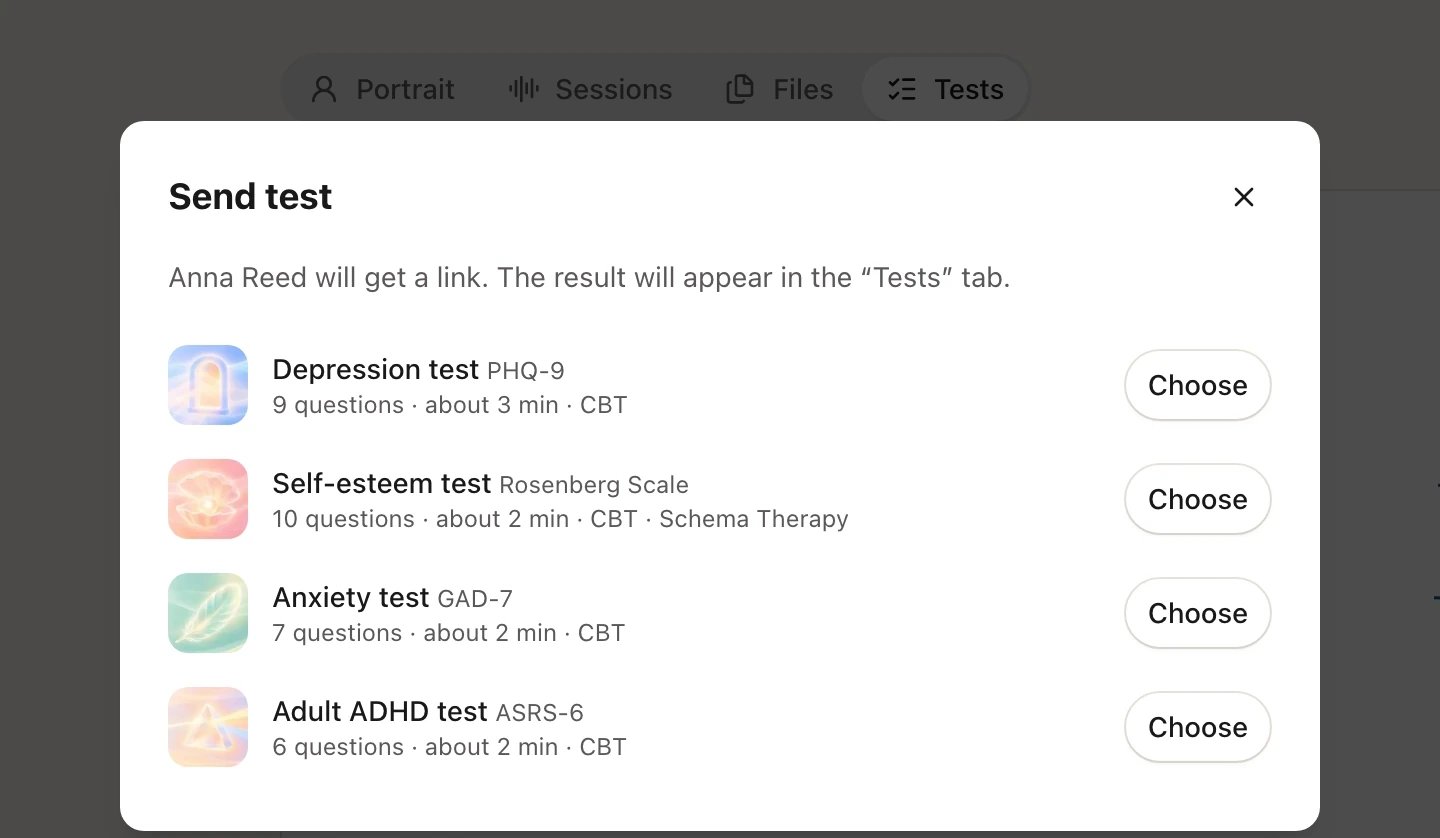
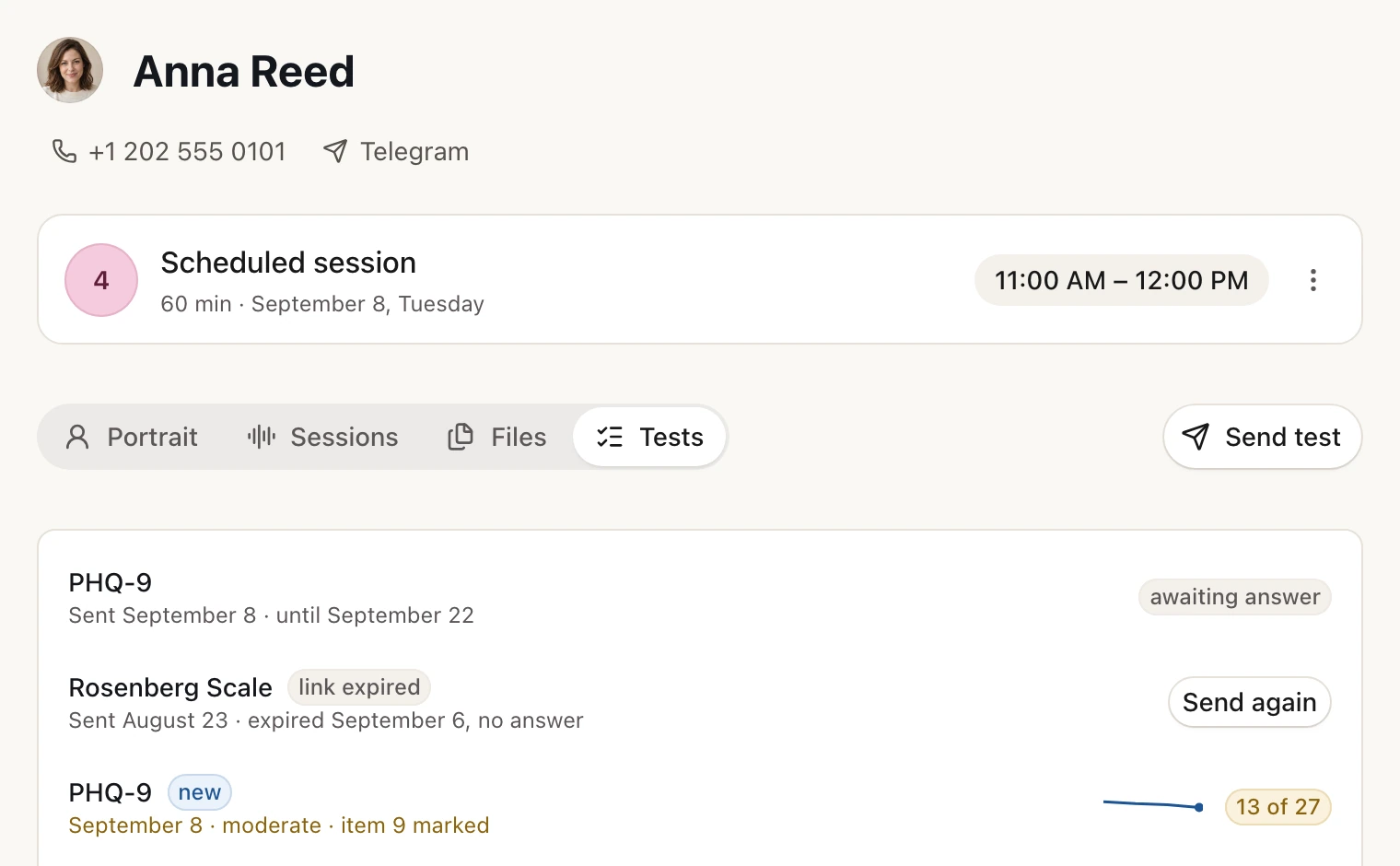
Send scales to clients and watch the change in their card
The client takes the test from a link, no account needed. The result lands in their card and Sessio compares it with last time.