Ten short statements show how much you usually expect good things from the future. The result is a score from 0 to 24: the higher it is, the more optimistic your outlook. It describes a habit of thinking, not a diagnosis, and it is not a verdict on you.
The LOT-R (Life Orientation Test, Revised) was published by Michael Scheier, Charles Carver and Michael Bridges in 1994. It measures dispositional optimism: a general expectation that good things will happen. You answer ten statements from strongly disagree to strongly agree. Six of them are scored (three worded optimistically, three pessimistically and reversed), so the total runs from 0 to 24. The other four are fillers: you answer them, but they add no points. The authors set no cut-offs and treat optimism as a continuous dimension.
This is not a diagnosis
The LOT-R is a research instrument and is not meant for clinical use. A score does not say whether you are healthy or unwell, and it has no low or high cut-off. Use it as a prompt for reflection, and talk to a professional if low mood or hopelessness bother you.
What happens to your answers
Your score is calculated right in your browser. Your answers reach our server only if you ask for your result by email: we write the email and do not keep them.
Why do four of the statements not count?
They are fillers, such as "It's easy for me to relax". The authors added them so the test does not look like a test of optimism only. You answer them like the rest, but they add nothing to the score.
What is a good score?
There is no cut-off: optimism is read as a continuous scale from 0 to 24. Compare the number only with yourself over time. If low spirits last, it is worth talking to a therapist.
Source: LOT-R: Scheier M. F., Carver C. S., Bridges M. W., 1994, Distinguishing optimism from neuroticism (and trait anxiety, self-mastery, and self-esteem): a re-evaluation of the Life Orientation Test, Journal of Personality and Social Psychology 67(6), 1063-1078, DOI 10.1037/0022-3514.67.6.1063; form: C. S. Carver, psy.miami.edu/faculty/ccarver/lot-r.html.
For rights holders: if you hold the rights to this scale or its translation and object to it being here, write to support@sessio.health. We will take it down or ask for your permission.
For therapists
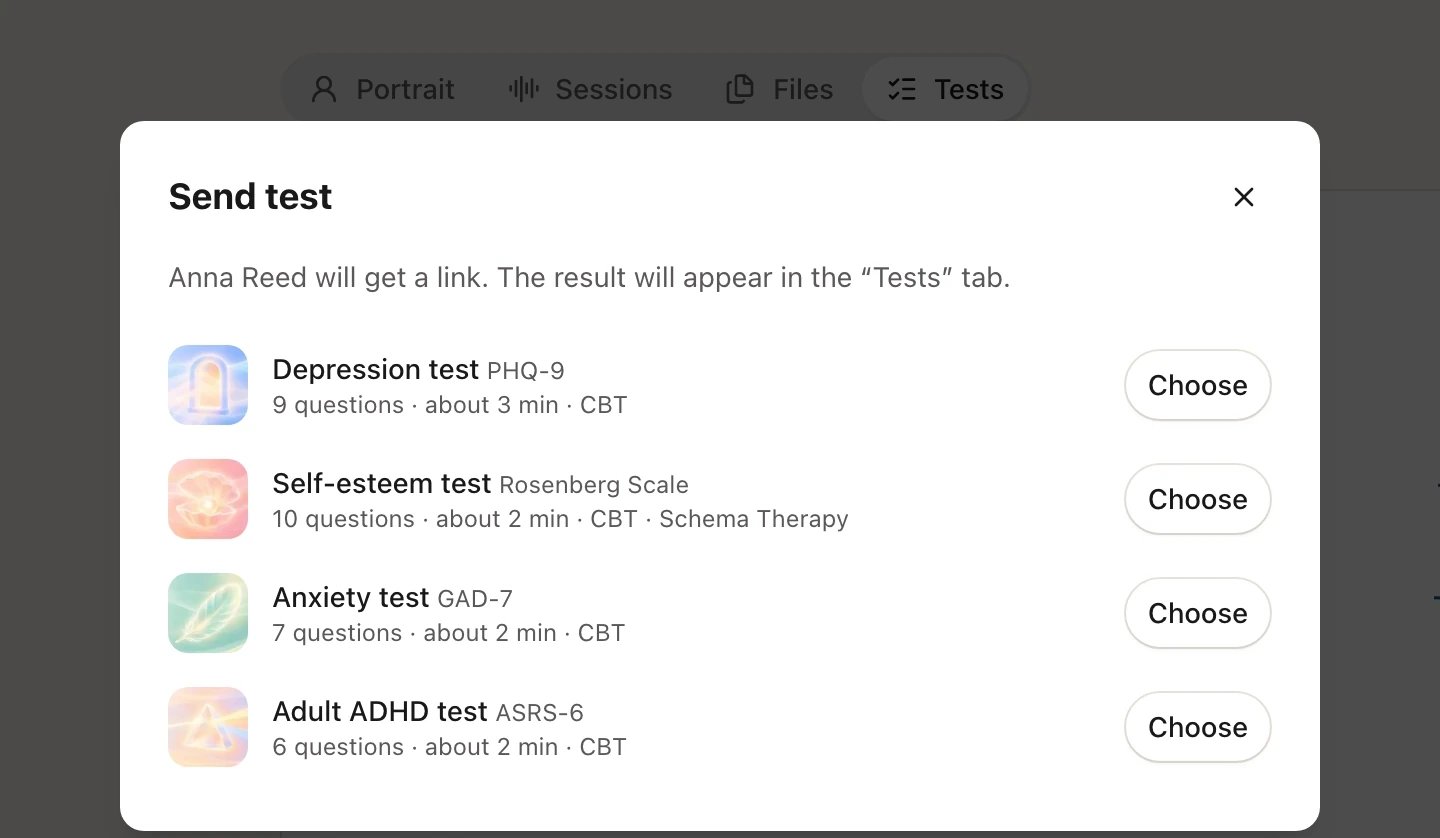
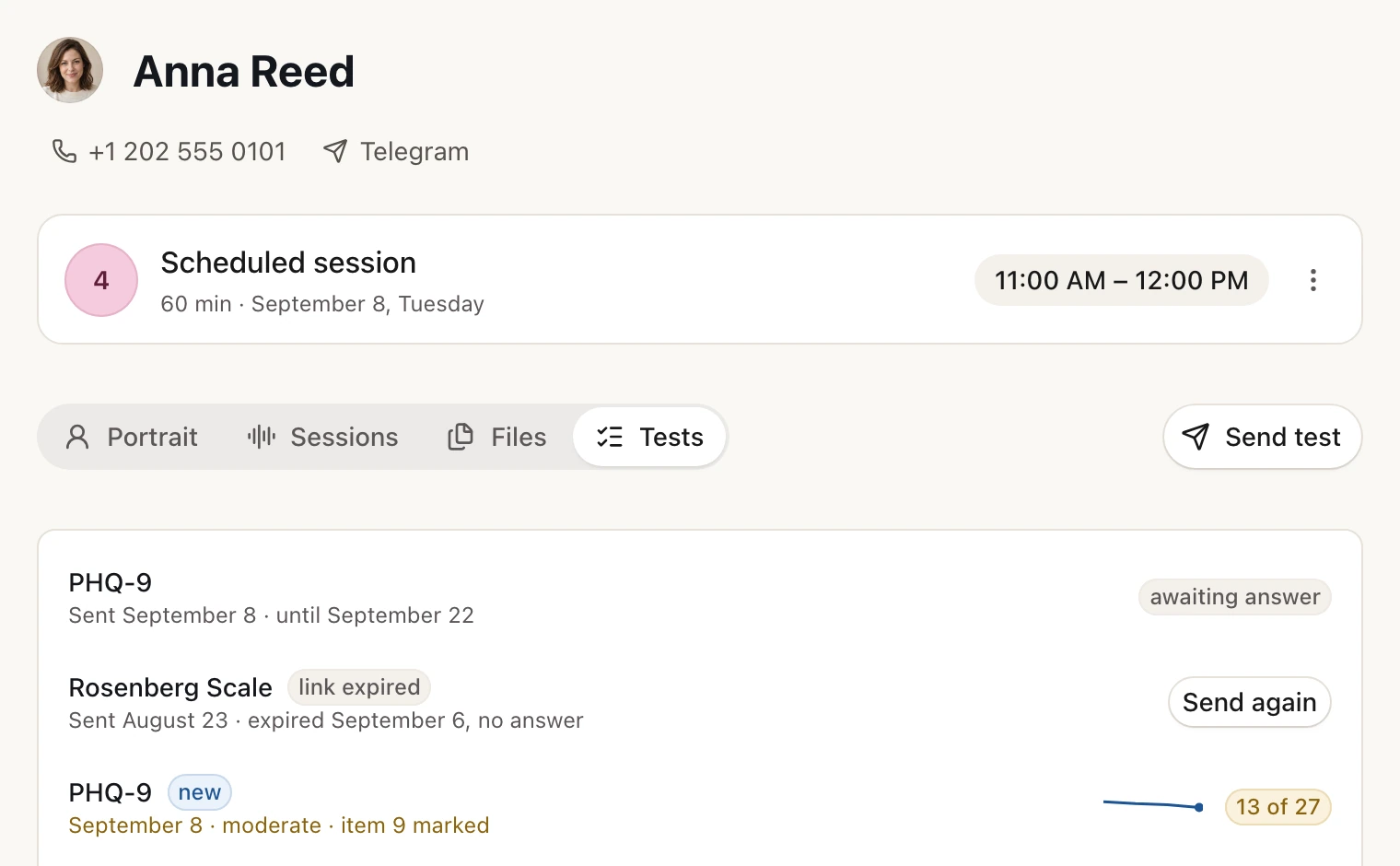
Send scales to clients and watch the change in their card
The client takes the test from a link, no account needed. The result lands in their card and Sessio compares it with last time.