Shows how often you put off decisions and tasks even when it hurts you. Twelve statements about starting late, wasting time and missing deadlines give one average from 1 to 5. It is a prompt to look at your habits, not a diagnosis.
The Pure Procrastination Scale (PPS) was published by Piers Steel in 2010. Its 12 statements cover delaying decisions, starting and finishing tasks late, and running out of time before deadlines. Each answer scores 1 to 5 and the result is the average of all twelve, from 1 to 5. A higher average means you put things off more often. The scale has no official cutoffs, so this page shows only your score.
This is not a diagnosis
Procrastination is a habit, not a disorder, and a questionnaire cannot tell its cause. Frequent delay can come with stress, perfectionism, low mood or attention difficulties, and a professional can help sort that out.
What happens to your answers
Your score is calculated right in your browser. Your answers reach our server only if you ask for your result by email: we write the email and do not keep them.
Is procrastination the same as laziness?
No. A lazy person does not want to act, while a procrastinator often wants to and still delays, knowing it will cost them. The scale asks about exactly this kind of delay.
Source: Pure Procrastination Scale (PPS): Steel P., 2010, Arousal, avoidant and decisional procrastinators: Do they exist?, Personality and Individual Differences 48(8), 926-934. Items as in Svartdal F., Steel P., 2017, Irrational Delay Revisited, Frontiers in Psychology 8:1927, Table 1.
For rights holders: if you hold the rights to this scale or its translation and object to it being here, write to support@sessio.health. We will take it down or ask for your permission.
For therapists
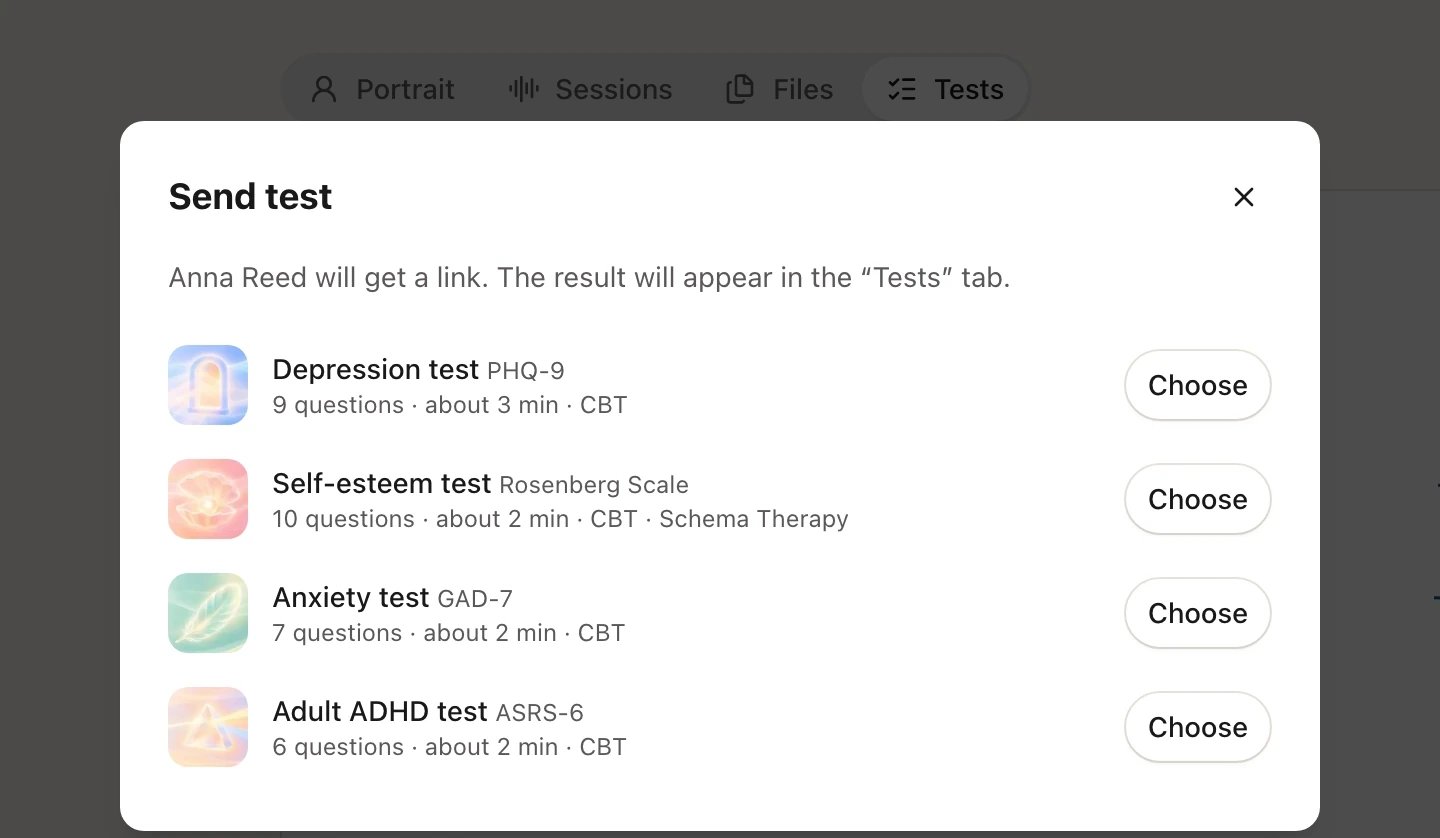
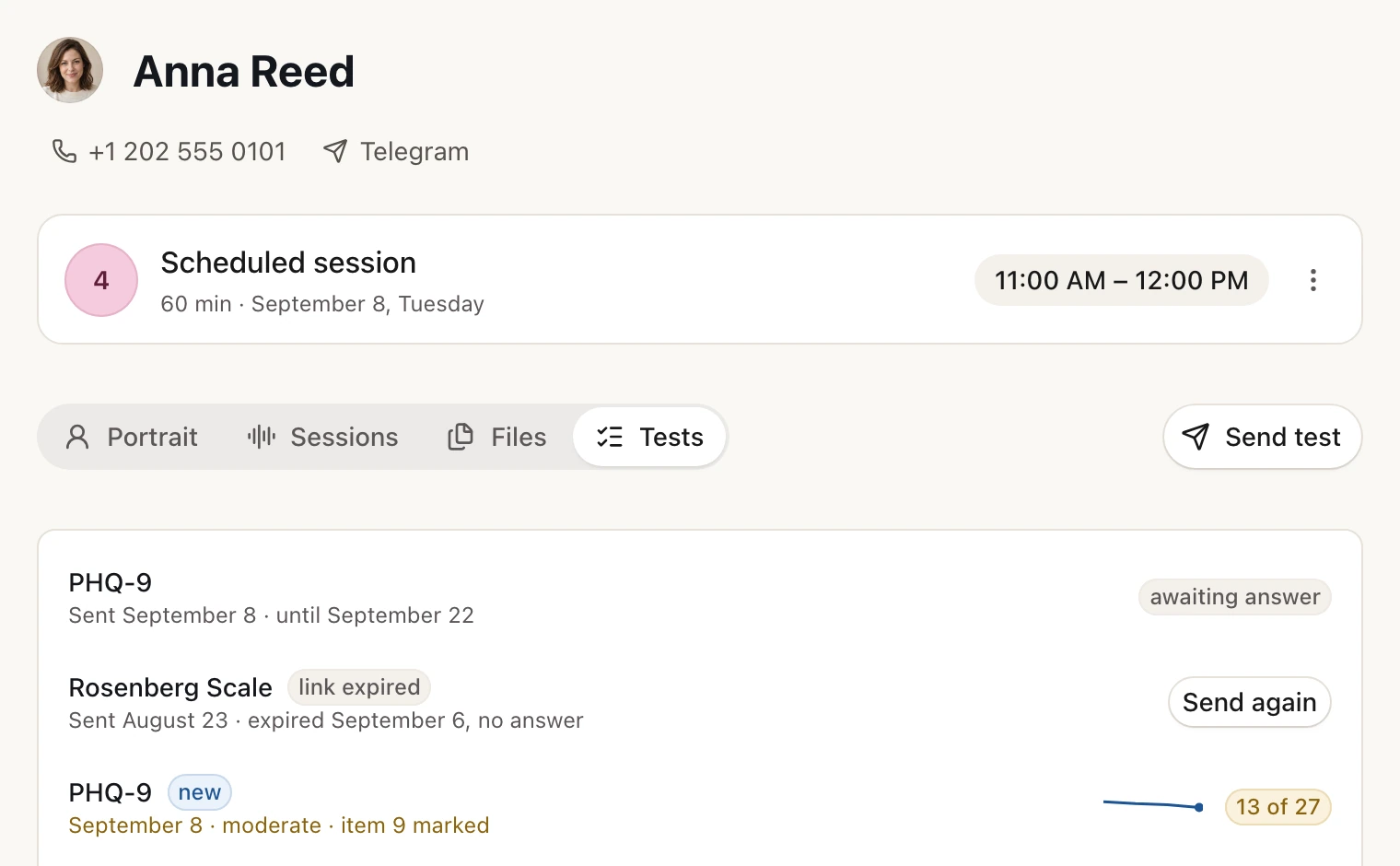
Send scales to clients and watch the change in their card
The client takes the test from a link, no account needed. The result lands in their card and Sessio compares it with last time.